The Oman Peninsula
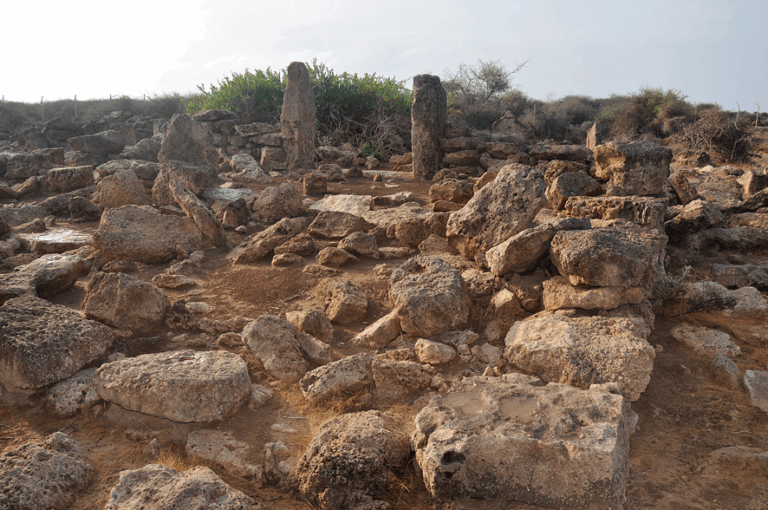
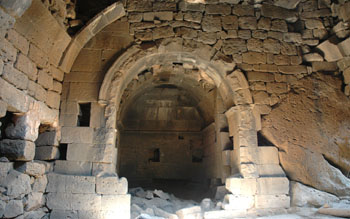
Mleiha
Research managers : Sophie Méry and Michel Mouton
The site of Mleiha was the subject of excavations organized by the French Archaeological Mission in Sharjah from 1986 to 2000.
After several years of studying the accumulated documentation (with the publication of two books by the Maison de l’Orient), it now seems necessary for us to resume field exploration in certain areas of the site.
Indeed, the abandonment of Mleiha, which we now place around the middle of the 3rd century AD, remains poorly understood. It corresponds to a period of population decline throughout the region, concurrent with the rise of Sassanian power in the Arab-Persian Gulf. Certainly, military campaigns were conducted in these areas, and the phases preceding the abandonment of the sites are marked by the construction of forts and fortified buildings. But a very noticeable change in the semi-arid environment may also have forced a gradual shift northward in the peninsula.
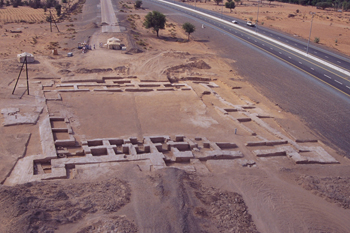
These questions justify the resumption of work at Mleiha, in sector H, where a large burnt building from the final phase of the site is preserved. A project has been submitted to the authorities of the Emirate of Sharjah, which should allow, over two field seasons, the full excavation of this structure, which also appears to have been fortified, according to observations made before the land was put under cultivation.
The work will be carried out by Michel Mouton as part of the French Archaeological Mission in the United Arab Emirates, led by Sophie Méry.
Bibliography
- MOUTON M. (2008), La péninsule d’Oman de la fin de l’Age du fer au début de la période sassanide, Society for Arabian Studies Monographs n°6, BAR International Series 1776, Archaeopress, Oxford
- CUNY J. & MOUTON M. (2009), La transition vers la période sassanide dans la péninsule d’Oman : chronologie et modes de peuplement, in Ch. Robin & J. Schiettecatte eds. L’Arabie à la veille de l’Islam, Brepols, p. 91-127.
- MOUTON M. (s. p.), Settlement Pattern of North-East and South-East Arabia in Antiquity, Arabian Archaeology and Epigraphy 2009.
- MOUTON M. (s. p.), La période Pré-islamique Récente dans la péninsule d’Oman : chronologie et mode de peuplement, in A. Avanzini ed. The Oman Peninsula in the 1st Millenium BC, L’erma di Bretschneider. Roma.