Parution | Daily Life at Kültepe ancient Kanesh, Bilgin Kültür Sanat
Nous avons le plaisir de vous annoncer la parution de l’ouvrage de Fikri Kulakoğlu et Cécile Michel intitulé Daily Life at Kültepe Ancient Kanesh, aux Editions Bilgin Kültür Sanat.
Kültepe, the ancient city of Kanesh near Kayseri, is Turkey’s most important Bronze Age site and holds a unique place in Near Eastern and Middle Eastern archaeology. Its 22,700 cuneiform tablets, mainly dating to the nineteenth century BC, are recorded in UNESCO’s Memory of the World Register and represent the first large group of private archives in human history. Thanks to these texts, as well as the rich archaeological discoveries made at Kültepe over the past 75 years, the authors of this book provide a vivid reconstruction of the daily lives of its inhabitants four thousand years ago.
Kültepe, l’ancienne ville de Kanesh près de Kayseri, est le site le plus important de l’Âge du Bronze en Turquie et occupe une place unique dans l’archéologie du Proche et du Moyen-Orient. Ses 22 700 tablettes cunéiformes, datant principalement du XIXe siècle av. J.-C., sont inscrites au Registre de la Mémoire du monde de l’UNESCO et constituent le premier grand ensemble d’archives privées de l’histoire de l’humanité. Grâce à ces textes, ainsi qu’aux riches découvertes archéologiques réalisées à Kültepe au cours des 75 dernières années, les auteurs de ce livre offrent une reconstruction vivante de la vie quotidienne de ses habitants il y a quatre mille ans. (Traduction personnelle)
Fikri Kulakoğlu, Cécile Michel. Daily Life at Kültepe Ancient Kanesh. Kültür Sanat Yayınları Basım Vayım, 2025. 281p. ⟨ISBN-ISSN : 9786258550092⟩
Pour vous procurez cet ouvrage, rendez-vous sur le site de l’éditeur.
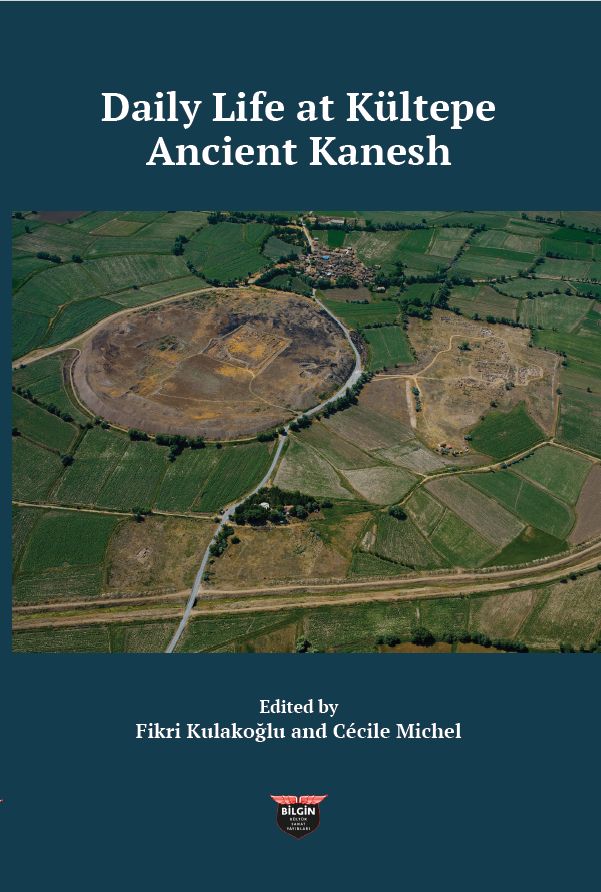
Table des matières
Introduction………………………………………………………………………………… 1
Acknowledgements………………………………………………………………………. 5
Map of Ancient Anatolia and the Assyrian Trade Roads………………………6
Chapter 1. The Archaeology and History of Kültepe ……………………….. 7
The History of its Discovery and the First Excavations………………….. 8
The Archaeology of Kültepe during Early and Middle Bronze Age…. 13
History of the Old Assyrian Period from 2000 to 1700 BC………….. 28
Demography…………………………………………………………………………… 37
Kültepe after the Karum Period………………………………………………… 44
The Assyrians in Anatolia after the Karum Period……………………….. 47
Kültepe during the Hellenistic and Roman Periods……………………… 49
Chapter 2. Agriculture and Herding ……………………………………………. 53
Environment, Landscape and Resources…………………………………….. 54
Agriculture and Taxes………………………………………………………………. 58
Animal Husbandry………………………………………………………………….. 61
Eating and Drinking……………………………………………………………….. 65
Chapter 3. Writing, Sealing and Measuring………………………………….. 71
The Assyrian Merchants’ Archives……………………………………………… 72
Sealing Practices……………………………………………………………………… 81
The Language of the Old Assyrian Merchants…………………………….. 87
Numbers and Metrology………………………………………………………….. 90
Calendars……………………………………………………………………………….. 93
Literacy and Education……………………………………………………………. 96
Palaeography………………………………………………………………………… 102
Chapter 4. Trade and Economy………………………………………………….. 105
Exchanges and the Trade System…………………………………………….. 106
Treaties and International Law……………………………………………….. 119
Geography of Trade……………………………………………………………….. 127
The Assyrian Firms and Partnerships……………………………………….. 130
Transportation………………………………………………………………………. 135
Smuggling and the Narrow Track……………………………………………. 141
Chapter 5. Crafts and Arts…………………………………………………………. 143
Metallurgy……………………………………………………………………………. 144
Jewellery………………………………………………………………………………. 151
Seal Artistic Styles and Owners………………………………………………. 159
Textiles………………………………………………………………………………… 163
The Ceramic Assemblage……………………………………………………….. 172
Chapter 6. Society…………………………………………………………………….. 179
Family and the Role of Women………………………………………………. 180
Family Stories ………………………………………………………………………. 189
Titles, Jobs and Slaves……………………………………………………………. 200
Urbanisation and Architecture………………………………………………… 203
The House and its Furniture …………………………………………………… 210
Chapter 7. Religions…………………………………………………………………. 217
Gods, Temples and Festivals……………………………………………………. 218
Consecrated Women ………………………………………………………… 226
God Representations……………………………………………………………… 228
Burials…………………………………………………………………………………. 235
Religious Drinking Vessels……………………………………………………… 242
Conclusion………………………………………………………………………………. 247
Appendices………………………………………………………………………………. 249
General Bibliography…………………………………………………………….. 249
Indexes………………………………………………………………………………… 251
List of Images……………………………………………………………………….. 259
List of Cited Texts…………………………………………………………………. 271
The Authors and their Contributions……………………………………….. 279