
Preservation of cultural heritage
The responsibility of preserving cultural heritage, inherent to archaeology, is an important aspect of the team’s work, particularly through its expertise for countries in situations of war or crisis (Syria, Lebanon, Yemen, Ethiopia) and in designing preservation programs (earth architecture, prevention of modern urbanization: Kuwait, Tajikistan).
Similarly, the handling (inventory, cataloging) of the scientific and documentary archives of archaeological missions and OrAM members, up to their transfer to the archives service of MSH Mondes (where they can then be consulted and disseminated), occupies a primary place and is often carried out in connection with the teams involved in this research (ArScAn/VEPMO; CEPAM).
From this activity also arises production on the careers of researchers who contributed to the development of archaeology in the regions concerned (D. Schlumberger, J. Lassus). The publ …
This activity also results in a production on the careers of researchers who contributed to the development of archaeology in the regions concerned (D. Schlumberger, J. Lassus). Publications play a fundamental role in the preservation of heritage, sometimes being the only trace that remains, and are disseminated as much as possible according to the principles of open science.
- Expertise for the preservation of sites, buildings, and furnishings: monitoring for closed sites and countries; preservation programs for ongoing missions; 3D reconstructions of existing and lost heritage: J. Abdul Massih; P.-M. Blanc; J.-F. Breton; M. Gelin; Th. Fournet.
- Archiving of missions: Jawf-Hadhramawt, Yemen; Sharjah, Umm al-Qaywayn, United Arab Emirates; Bosra, Dura-Europos, Syria; Khirbet Edh-Dharih, Jordan; Kwiha, Ethiopia.
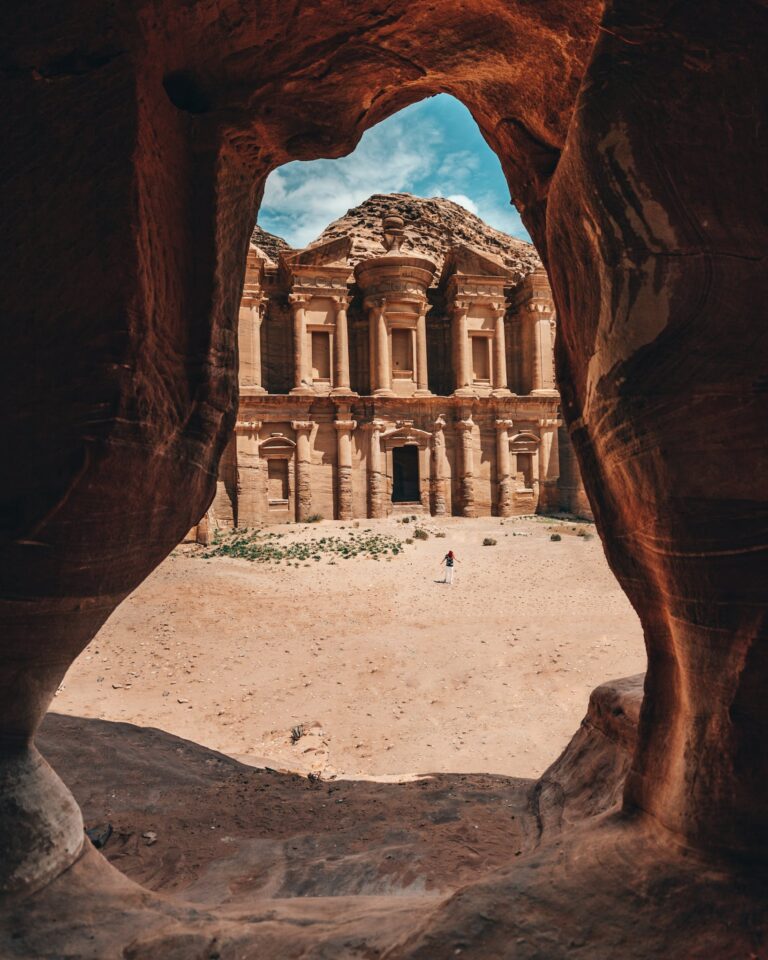
- Publications: From completed programs: Bosra, Shaara, Philippopolis, Sia, Palmyra, Cyrrhus, Dura-Europos, Khirbet Edh-Dharih, Qani, Jawf-Hadramawt, Tigray, Mleiha. From ongoing programs: Failaka, Petra, Farasan Islands, Hegra, Tajikistan, Aramaic inscriptions, Ed-Deir, Kwiha. On archaeological furnishings: inscriptions from Um El-Amr; ceramics. From conferences and synthesis projects: P.-M. Blanc; J.-F. Breton; J. Dentzer-Feydy; R. Douaud; Th. Fournet; M. Gelin; M. Mouton; F. Renel; C. Saliou; G. Tallet; F. Villeneuve.
- Transfer of skills, through the training of experienced researchers and new generations: all the missions and all the statutory members of OrAM are responsible for the transmission of knowledge, both in the field and in the laboratory.