Ancient stone construction of ruined city

Expressions, Practices, Representations – From Production to Exchange

The study of inscriptions, cultural practices, and archaeological artifacts from excavations and surveys is inseparable from the study of sites and paves the way for a better understanding of the intellectual and material life of past civilizations.

This research is a key element for understanding exchanges and their geographical expansion, ideas and artistic movements, and contributes both to the definition of regional cultural identities and to major interregional trends.

The places and methods of manufacturing objects, their circulation, the chronological phases they reveal, and the cultural connections they uncover are essential links for a more comprehensive understanding of historical issues. This theme is fully part of Axis 4 of ArScAn, from which it partly takes its title, as well as Axis 3.

  • Greek and Latin inscriptions; Semitic epigraphy: M. Goréa; C. Saliou; G. Tallet; F. Villeneuve.
  • Religious practices; funerary practices: M. Laguardia; P. Piraud-Fournet.
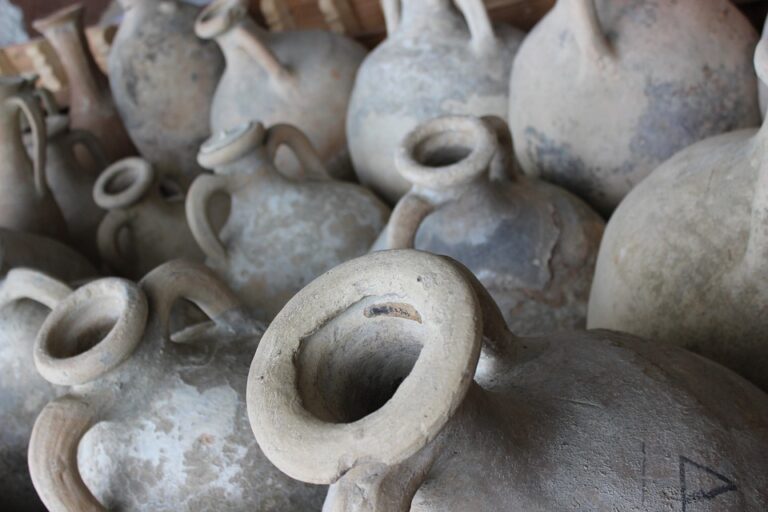
  • Material productions: ceramics; numismatics; bone materials: P.-M. Blanc; C. Durand; B. Khan; G. Malingue; F. Renel; L. Vié.
  • Trade of goods, movement of people: S. Marion de Procé; M. Mouton; G. Tallet.
  • Iconography (portraits, statuary, objects): funerary; religious; symbolic, representation of power; architectural representation; mosaics: B. Annan; C. Arnould-Béhar; M.-C. Comte; J. Dentzer-Feydy.
Publications similaires

  • Collective Projects

    Collective Projects Developed collaboratively, evolving, and broadly open across the humanities, the Collective Projects encourage joint work beyond the chronological or geographical boundaries specific to the teams over the course of a five-year project or longer. Serving as meeting places for the members of the UMR, these projects are led by at least two internal…

  • Espace/territoire

    Les modes d’appropriation et d’organisation de l’espace péri-urbain et du territoire (organisation et protection du territoire, circulation et accès [voies, stations], gestion des ressources [irrigation, carrières/mines]), qu’ils aient conduit à la formation et au développement des agglomérations denses ou dispersées (villes, villages, installations sur les marges arides), ou qu’ils résultent de l’activité de ces agglomérations…

  • ici un article de test

    Lorem ipsum dolor sit amet, consectetur adipiscing elit. Nam eget sodales justo. Class aptent taciti sociosqu ad litora torquent per conubia nostra, per inceptos himenaeos. Suspendisse ac nibh sed sapien vulputate volutpat bibendum vitae odio. Cras mattis facilisis quam, tempus laoreet arcu cursus nec. Nunc eu viverra nisl. Morbi massa lacus, facilisis nec dignissim at,…

  • Bibliographie

    2025Tenu A. – « L’énigme Kunara. La cité aux confins de la Mésopotamie », Pour la Science n°574 – Août 2025, p. 22-30.Chiti B. – « The Emergence of Urban Landscapes in Northern Mesopotamia during the 3rd Millennium BCE: New Data from Kunara (Iraqi Kurdistan) », Proceedings of the 13th International Congress on the Archaeology of the Ancient Near…