Takht-i Sangin: Study of the Hellenistic Settlement
Excavation and research program
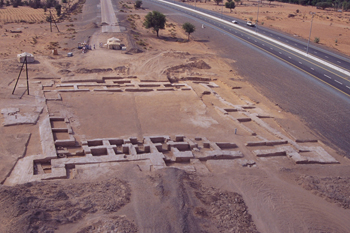
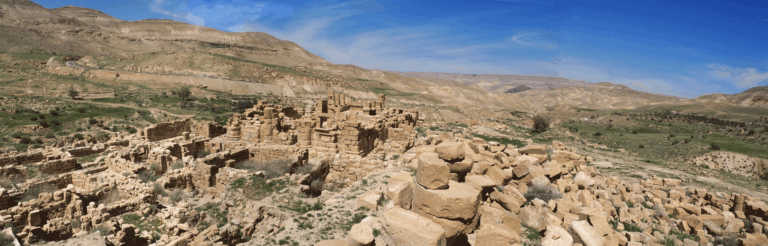
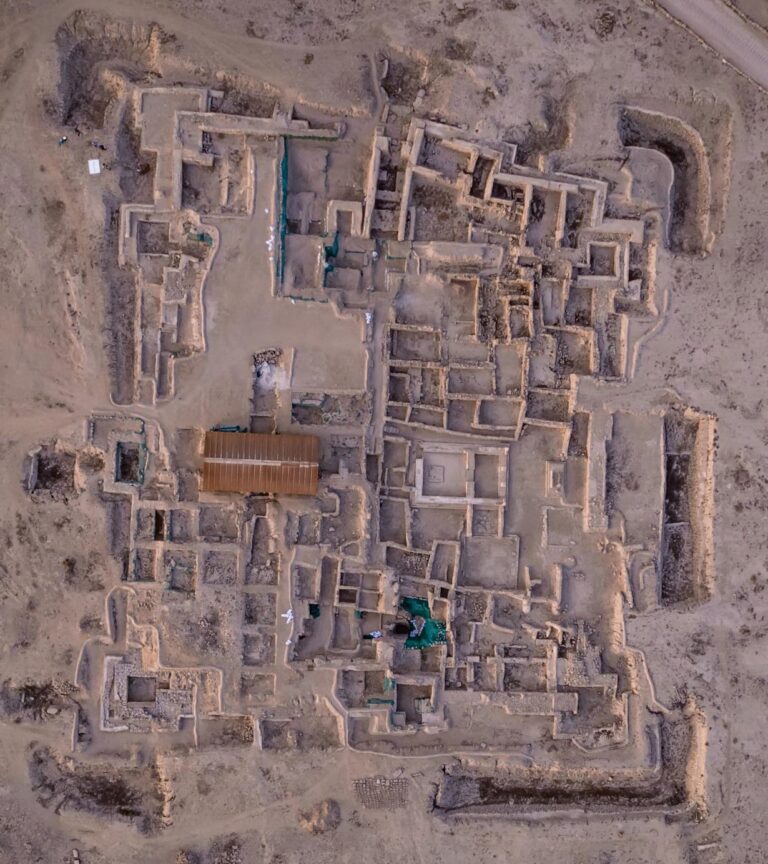
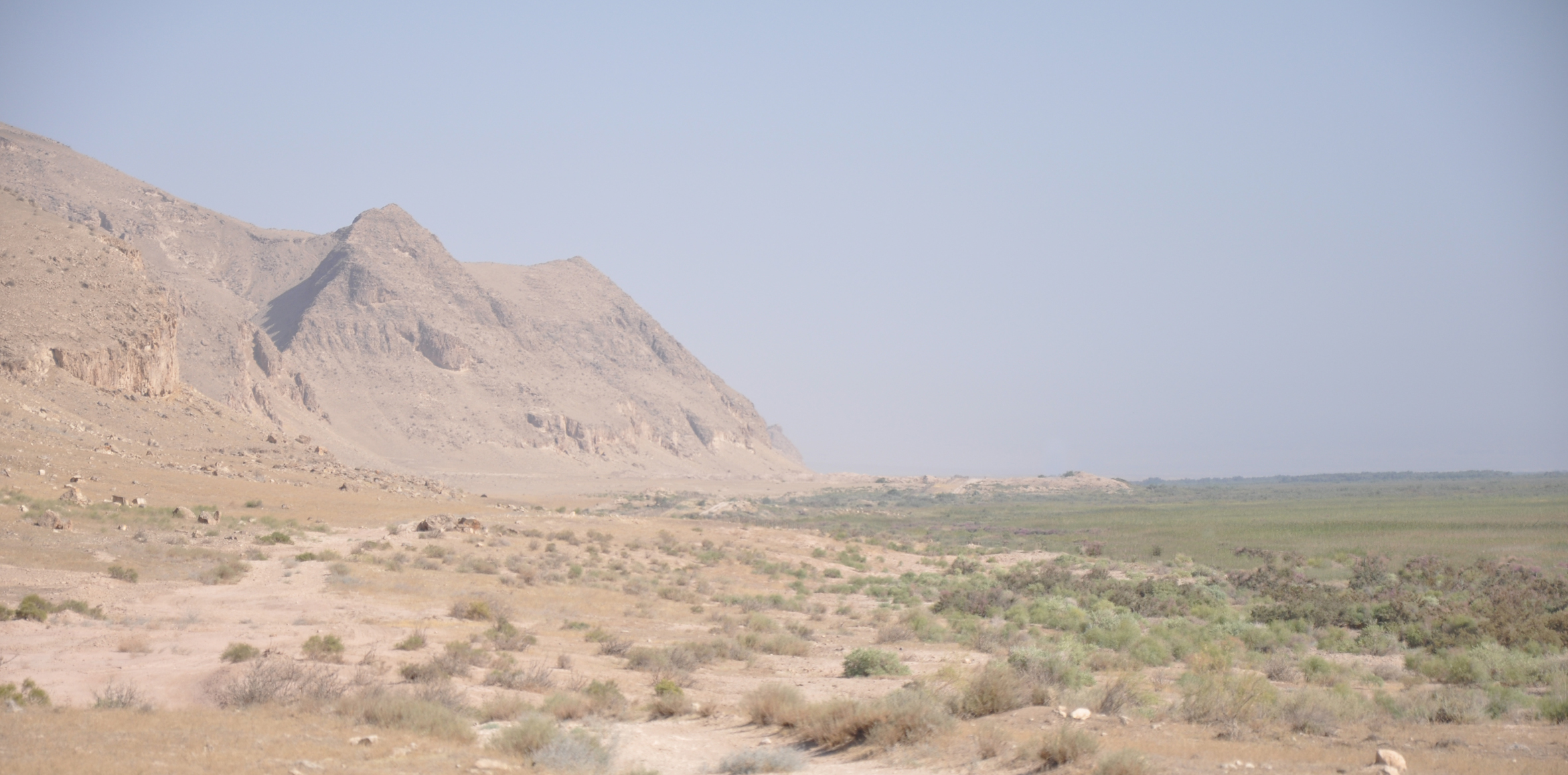
The site of Takht-i Sangin, located in southern Tajikistan and north of ancient Bactria, lies at the confluence of the Vakhsh and Pandj rivers, which together form the Amu Darya. Positioned on a narrow strip of land between the river and a mountain range (Aktau), the site was first identified in the late 19th century and underwent sporadic excavations in the early 20th century. It was subsequently explored by Russian and Tajik teams until 2010.
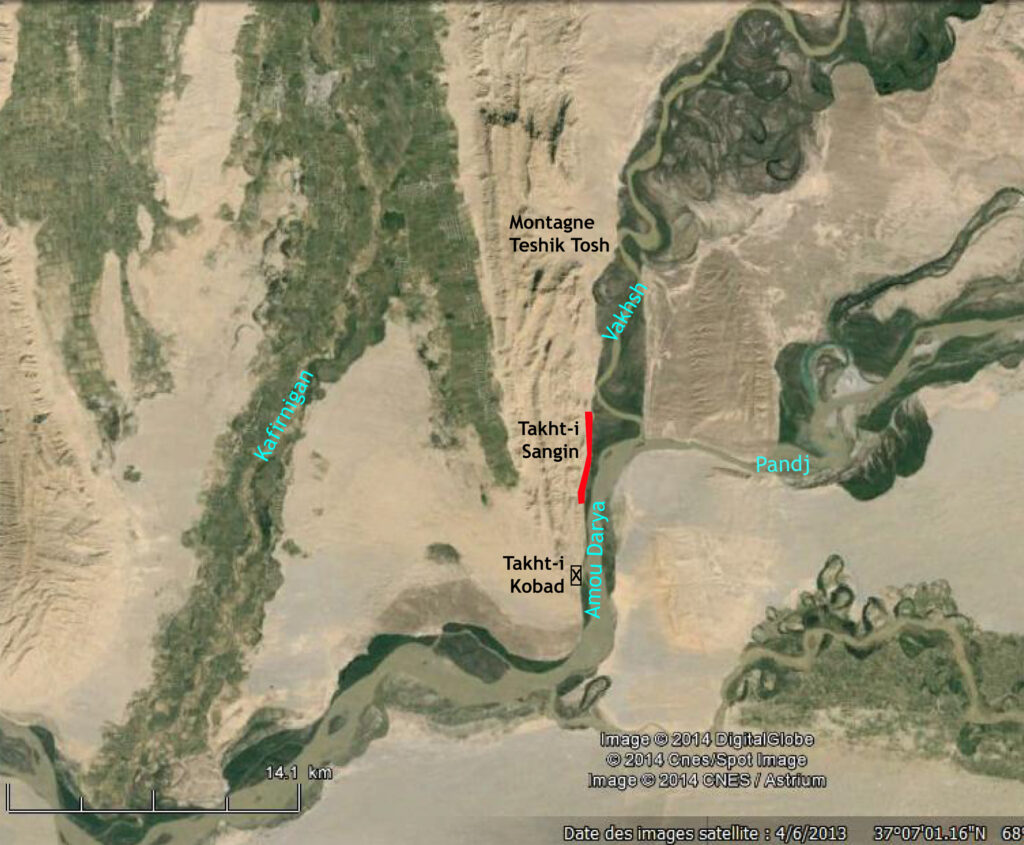
In 2013, the Institute of History, Archaeology, and Ethnography of the Academy of Sciences of Tajikistan (IHAET) approached French archaeologists to resume excavations at Takht-i Sangin. The French Archaeological Mission in Central Asia, then directed by H.-P. Francfort, contacted the APOHR team—now OrAM. Following a joint field visit in 2013 and initial excavations in 2014, M. Gelin established the new French-Tajik mission in 2015. This mission operates under the auspices of the CNRS, the French Ministry of Europe and Foreign Affairs’ Excavations Commission, and the IHAET.
The Hypothesis of a Seleucid city
Based on the work of previous missions, Takht-i Sangin is believed to have been founded in the 3rd century BCE by Antiochus I, during the Seleucid domination of Bactria. The site appears to have endured until the Kushan period in the 2nd century CE, thus surviving nomadic invasions. For the Seleucid and Greco-Bactrian periods, its chronological phases align with those identified at Ai Khanoum, Termez, and Bactra — three significant cities located within a radius of approximately one hundred kilometres (in present-day Afghanistan and Uzbekistan).
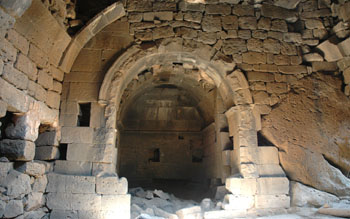
Takht-i Sangin is renowned for housing the Temple of the Oxus, and religious life seems to have held a prominent role there, given the temple’s central location and its deliberate positioning to dominate the site. The Oxus Treasure, discovered nearby, is sometimes associated with it.
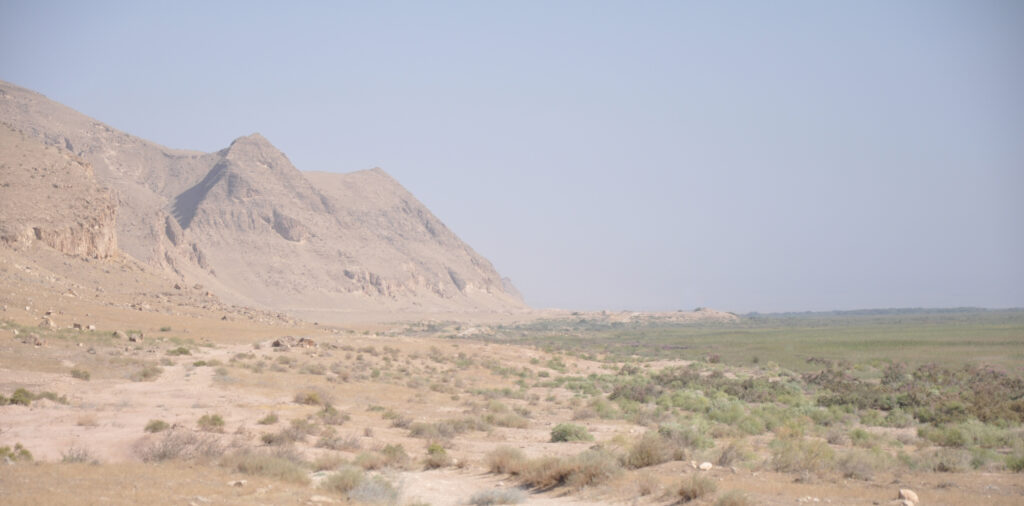
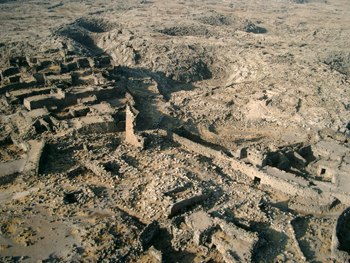
The building, situated in the citadel that overlooks the site and extends towards the river, was fully excavated by previous archaeologists. A Tajik team led by A. Drujinina conducted excavations in the settlement itself (1998-2010), focusing on several residential areas. However, due to the site’s extensive size, knowledge of the urban space remains limited. For instance, the exact boundaries of the city, the foundation dates of the long walls that traverse the site at various intervals, and the probable stages of the urban expansion are still unknown.
The Fortress as the Origin
The research we have conducted since 2014 suggests the possibility of an initially modest foundation: if this was indeed a Seleucid creation, it should be considered more as a fortress than a major city. Only further studies will allow us to determine the true nature of this Seleucid foundation and how the subsequent development of the urban area unfolded. Unfortunately, the current security situation at the border prevents us from verifying these hypotheses at present.
The research was carried out in 2013 and 2014 thanks to and with the French Mission in Central Asia (H.-P. Francfort, F. Brunet), and from 2015 onwards as part of the French-Tajik Archaeological Mission in southern Tajikistan. This mission is supported by OrAM, the French Ministry for Europe and Foreign Affairs, the Sisyphe laboratory (METIS) at Pierre and Marie Curie University, the Academy of Sciences of Tajikistan, the Institute of History, Archaeology and Ethnography of Tajikistan, and the French Embassy in Tajikistan.
Participating OrAM members:
– Gelin Mathilde, archaeologist, CNRS, mission Director (2013-2014, 2017);
– Blanc Pierre-Marie, archaeologist, CNRS (2013-2014, 2017).
Participating ARSCAN members:
– Francfort Henri-Paul, archaeologist, French Academy of Inscriptions and Belles Lettres (2013-2014).
Others participants :
– Khudjageldiev Tura, archaeologist, IHAET (2013-2014, 2017);
– Sharipov Abdullah, archaeologist, IHAET (2017);
– Kurbanov Faez, archaeological base of Kobadian (2013-2014);
– Aslan Bérivan, geo-physican, METIS-UMR 7619 Laboratory, Paris 6 University (2014);
– Schwerdtner Ronald, surveyor (2014);
– Bolbolov Nekruz, surveyor (2017).
Bibliography
- Bernard P., 1994, « Le temple du dieu Oxus à Takht-i Sangin en Bactriane : temple du feu ou pas ? », Studia Iranica 23, p. 81-121.
- Bernard P., 2015, « Le temple du dieu Oxus à Takht-i Sangin au Tadjikistan, ou l’esprit de l’escalier », De Samarcande à Istanbul : étapes orientales, Hommage à Pierre Chuvin 2, V. Schiltz éd., Paris, p. 53-70.
- Drujinina A., “The structure of the urban site Takht-i Sangin and its vicinity”, Bulletin of Miho Museum 16, 2016, p. 1-49.
- Drujinina A., Linström G., 2013, « Kultgefäße im Oxos-Tempel – zur Frage der Kultkontinuität im unruhigen 2. Jh. V. Chr. « , Zwischen Ost und West. Neue Forschungen zum antiken Zentralasien, G. Linström, S. Hansen, A. Wieczorek, M. Tellenbach ed., Berlin, p. 171-186.
- Francfort H.-P., 2012, « Aï Khanoum and ‘temple with indented niches’ and Takht-i Sangin ‘Oxus temple’ in historical cultural perspective: outline hypothesis about the cults », Parthica 14, p. 109-136.
- Gelin M., “The defence of Takht-i Sangin”, Takht-i Sangin as an example of the synthesis of the civilisations of East and West, éd. N. K. Ubaydullo, N. D. Khodjaeva, A. N. Odinaev, Institut d’Histoire, Archéologie et Ethnographie A. Donish, Douchanbé, 2023, p. 92-112, ISBN 978-99985-946-9-2. https://hal.science/hal-04223835
- Gelin M., « Исследования на городище Тахти-Сангин » [Recherches sur le site de Takht-i Sangin], Археологические работы в Таджикистане [Travaux archéologiques du Tadjikistan] 40, 2019, Douchanbé, p. 140-163. https://hal.archives-ouvertes.fr/hal-03286383
- Gelin M., « Nouvelles recherches à Takht-i Sangin », Journal of Historical, Philological and Cultural Studies 47-1, Académie des Sciences de Russie, Moscou-Magnitogorsk-Novossibirsk, 2015, p. 32-45 et pl. 1-2. https://hal.archives-ouvertes.fr/hal-03010484v2/document
- Gelin M., Blanc P.-M., « Тахти Сангин, 2017. Предварительный отчет » [Takht-i Sangin, 2017. Rapport préliminaire], Археологические работы в Таджикистане [Travaux archéologiques du Tadjikistan] 42, Douchanbé, 2022, p. 153-162. https://hal.science/hal-03258110v1
- Gelin M., Drujinina A., « Le site de Takht-i Sangin », Tadjikistan, au pays des fleuves d’or, Paris-Gand, Musée Guimet-Éditions Snoeck, 2021, p. 78-79.
- Gelin M., Drujinina A., « Cat. 39. Poignée d’épée représentant Héraklès luttant contre Achéloos », Tadjikistan, au pays des fleuves d’or, Paris-Gand, Musée Guimet-Editions Snoeck, 2021, p. 82-83.
- Gelin M., Drujinina A., « Cat. 40. Tête d’Alexandre-Héraklès provenant d’un fourreau de machaira », Tadjikistan, au pays des fleuves d’or, Paris-Gand, Musée Guimet-Editions Snoeck, 2021, p. 84-85.
- Gelin M., Drujinina A., « Cat. 44. Autel dédié à l’Oxus par Atrosokès, avec Marsyas jouant de la double flûte », Tadjikistan, au pays des fleuves d’or, Paris-Gand, Musée Guimet-Editions Snoeck, 2021, p. 88-89.
- Gelin M., Drujinina A., « Cat. 47. Jeune homme (du type d’Apollon ou d’Éros) », Tadjikistan, au pays des fleuves d’or, Paris-Gand, Musée Guimet-Editions Snoeck, 2021, p. 92-93.
- Gelin M., Drujinina A., « Cat. 61. Plaque décorative de fourreau d’épée (?) avec des scènes de chasse et de banquet », Tadjikistan, au pays des fleuves d’or, Paris-Gand, Musée Guimet-Editions Snoeck, 2021, p. 102-103.
- Litvinskij B. A., 2000, « Бактрийский храм Окса и восточноиранский эллинизм. Проблемы и гипотезы » [Le temple bactrien de l’Oxus et l’hellénisme oriental iranien. Problèmes et hypothèses], Вестник древней истории [Journal d’histoire ancienne] 2, p. 213-221.
- Litvinski B. A., Pichikian I. R., Эллинистический храм Окса в Бактрии (ЮжныйТаджикистан), 1, Раскопки, архитектура, религиозная жизнь [Le temple hellénistique de l’Oxus en Bactriane, 1, Fouilles, architecture, vie religieuse], Moscou, 2000.
- Litvinski B. A., Pichikian I. R., Эллинистический храм Окса в Бактрии (Южный Таджикистан), 2, Бактрийское вооружение в древневосточном и греческом контекст [Le temple hellénistique de l’Oxus en Bactriane, 2, Les armements de Bactriane dans le contexte de l’Orient ancient et grec], Moscou, 2001.
- Litvinski B. A., Pichikian I. R., Эллинистический храм Окса в Бактрии (Южный Таджикистан), 3, Искусство, художественное ремесло, музыкальный инструменту [Le temple hellénistique de l’Oxus en Bactriane, 3, Art, artisanat, instruments de musique], Moscou, 2010.
- Litvinskiy B. A., Pichikiyan I. R., « The temple of the Oxus », Journal of the Royal Asiatic Society of Great Britain and Ireland 2, 1981, p. 133-167.
- Litvinskii B. A., Pichikian I. R., « The Hellenistic Architecture and Art of the Temple of the Oxus », Bulletin of the Asia Institute 8, 1994, p. 47-66.